
Innovation or Imitation? Navigating the Creative Uniformity of Generative Tools
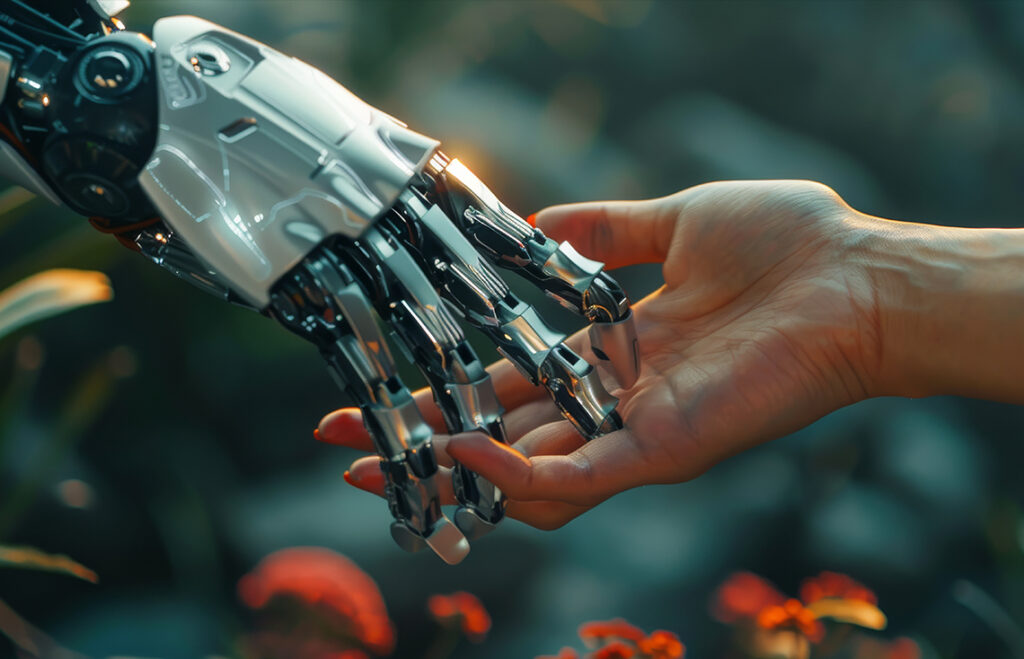
Generative artificial intelligence has moved remarkably quickly from technological novelty to an everyday creative tool. Only a few years ago, asking an AI system to write a screenplay, compose music, design an advertising campaign, generate photorealistic imagery or produce video from a sentence sounded experimental. Today, these capabilities are increasingly part of normal creative workflows.
Writers use AI to brainstorm. Designers use it to explore visual directions. Filmmakers use it for storyboarding, pre-visualisation and increasingly video production. Musicians experiment with AI-generated compositions and voices. Marketing teams can move from an idea to dozens of campaign concepts in minutes.
After several years of widespread generative AI use, however, a more interesting question is emerging.
Is AI actually making us more creative—or simply making creative production easier?
The evidence so far suggests that the answer is neither entirely positive nor negative. Generative AI can significantly expand what an individual is capable of creating, particularly by removing technical and practical barriers. At the same time, research is beginning to identify a potential paradox: AI can increase individual creative performance while reducing the diversity of ideas produced collectively.
In other words, AI may help more people create better work—but if everyone relies on similar systems, we may also begin creating work that looks, sounds and feels increasingly similar.
Serving Human Creativity, Not Replacing It

Perhaps the most productive way to think about generative AI is not as a replacement for human creativity, but as an amplifier of it.
The World Economic Forum has argued that AI should serve human creativity rather than replace it, particularly as the technology becomes embedded in entertainment and other creative industries. The broader challenge is therefore not simply developing more powerful AI systems, but determining how those systems are incorporated into human creative processes.
Generative AI is particularly powerful during the earliest stages of creation, when creators are searching for possibilities.
A writer facing a blank page can generate alternative story structures. A creative director can explore twenty campaign directions before selecting three worth developing. An architect can rapidly visualize different interpretations of a space. A filmmaker can experiment with camera angles, lighting and environments before committing resources to production.
Harvard Business Review has highlighted several ways generative AI can augment human creativity, including encouraging divergent thinking, challenging expertise bias, evaluating ideas, refining concepts and supporting collaboration.
The important distinction is that AI can expand the search space, while humans still decide where to go.
That distinction becomes increasingly important as AI grows more capable.
AI Has Lowered the Cost of Experimentation

One of AI’s greatest contributions to creativity may have little to do with whether machines themselves are “creative.”
It is the dramatic reduction in the cost of experimentation.
Traditionally, creative experimentation can be expensive. Producing a commercial might require actors, locations, equipment, production crews, editing and post-production before anyone knows whether the idea actually works. Creating multiple prototypes or visual concepts similarly consumes time and resources.
Generative AI changes this equation.
Ideas can now be visualised almost immediately. Concepts that previously remained as sketches, mood boards or descriptions can become images, animations, voices, music or videos before full production begins.
This creates a fundamentally different creative environment.
Instead of asking:
“Can we afford to try this?”
Creators can increasingly ask:
“What happens if we try this?”
That shift matters because experimentation is central to creativity. Many original ideas emerge through iteration, accidents and unexpected combinations rather than from a perfectly formed initial concept.
When experimentation becomes cheaper, creators can explore more possibilities before committing to one.
The Democratisation of Creativity
Generative AI has also dramatically lowered technical barriers to creative expression.
Someone no longer needs years of Photoshop experience to visualise an advertising concept. A small business does not necessarily need a large production team to prototype a campaign. An entrepreneur without coding expertise can build an early product demonstration. A filmmaker can visualise scenes that would previously have required sophisticated VFX capabilities.
This represents a genuine democratisation of creative production.
Historically, there has always been a difference between having an idea and possessing the skills or resources necessary to express it.
AI narrows that gap.
A person who cannot draw can communicate a visual concept. Someone uncomfortable with writing can structure their ideas more clearly. A musician can explore orchestration beyond the instruments they personally know how to play.
The result is not necessarily that everyone suddenly becomes a great artist. Instead, considerably more people gain access to the tools required to participate in creative production.
That is an important distinction.
AI democratises the ability to produce, but it does not automatically democratise taste, judgment, imagination or originality.
Those qualities remain much harder to automate.
The Creativity Paradox: Better Ideas, But More Similar Ideas
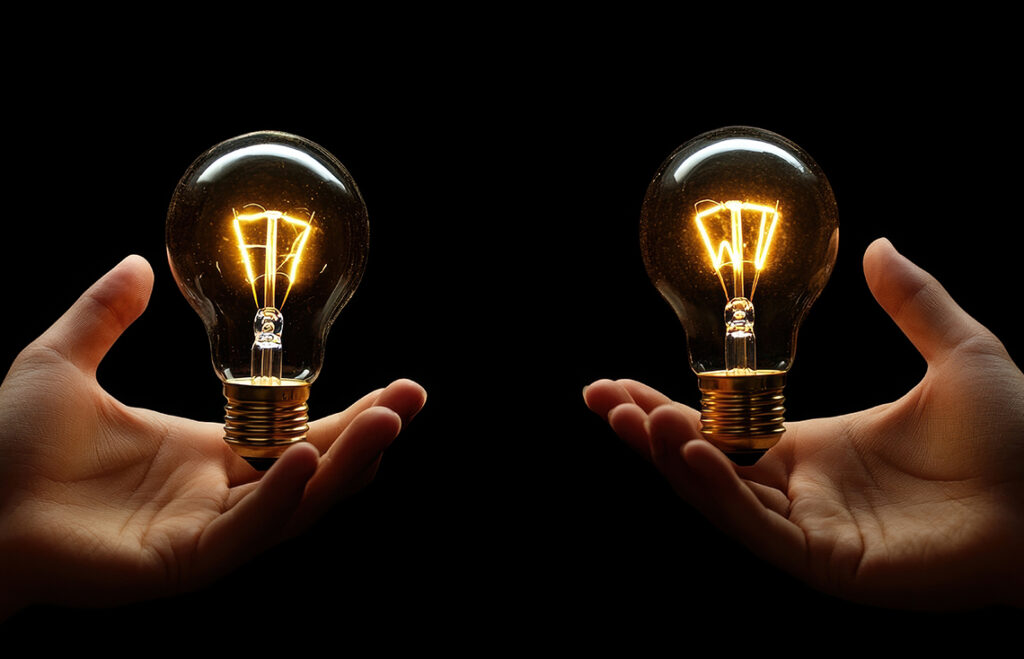
After several years of experimentation, one of the most interesting findings about AI and creativity has emerged.
AI appears capable of making individuals more creative while potentially making society’s creative output less diverse.
A 2024 study published in Science Advances examined writers producing short fiction with and without generative AI assistance. Writers with access to AI-generated ideas produced stories that evaluators considered more creative, better written and more enjoyable. The benefits were particularly noticeable among participants who initially demonstrated lower creative ability.
That sounds like an obvious victory for AI.
But researchers discovered something else.
The AI-assisted stories were also more similar to one another.
The individual creator improved, while collective diversity declined.
Research identified a similar tension in brainstorming: ChatGPT could improve the average creativity of individual ideas while reducing diversity across the overall pool of ideas.
By 2026, a systematic review and meta-analysis of research into human-AI co-creation found a small but statistically significant homogenization effect across studies. Importantly, the researchers did not interpret this as creativity simply disappearing. Rather, AI appeared to change how novelty was distributed across groups of creators, with the strength of the effect depending partly on the type of creative task.
This may become one of the defining creative challenges of the AI era.
AI can make everyone more capable while simultaneously encouraging everyone toward similar answers.