
The Night I Met My New Intern
The first time I realized Artificial Intelligence was coming for my lunch, I was staring at a glowing screen at 2:00 AM, fueled by cold coffee and existential dread. I am a creative. For years, my job description has basically been: “Stare into the void, find a spark of human madness, and turn it into art, copy, or design.” We creatives always thought we were safe from the robot revolution. We smugly watched automation take over assembly lines and spreadsheets. “Robots can do math,” we laughed, sipping our artisanal lattes. “But they can’t feel.”
Then, a generative AI model won an art competition, another wrote a passable television script, and a third generated a flawless corporate logo in three seconds. Suddenly, my latte tasted like ashes.
Being a creative in the age of AI feels a bit like being a horse-and-buggy driver watching the the world’s first true modern car, the Benz Patent-Motorwagen, roll off the assembly line. It is a dizzying mix of awe, irritation, and mild panic. However, after surviving the initial wave of panic, I have come to realize that AI isn’t necessarily the asteroid that wipes out the creative dinosaurs. Instead, it is a weird, hyperactive, sometimes hallucinating intern that we are all forced to work with.
Curing the Terror of the Blinking Cursor
Let’s start with the good stuff, because if I don’t stay positive, I will cry into my keyboard. AI has officially cured “Blank Page Syndrome.” Every creative knows the terror of the blinking cursor. You sit down to write an ad campaign, design a website, or paint a digital canvas, and your brain suddenly becomes empty and your inner critic starts whispering that you have no talent and should have gone to law school.
Now? I pull up an AI tool and type: “Give me twenty terrible, over-the-top ideas for a Merdeka commercial.” And boy, does it deliver. Within seconds, I have twenty concepts. Nineteen of them are more often than not, absolute garbage—but the twentieth might have a tiny spark in it.
AI is the ultimate brainstorming partner. It doesn’t get tired. It doesn’t judge my stupid questions. It just cranks out variations at lightning speed. It has transformed my workflow from “creating from scratch” to “curating and refining.” I spend less time digging the raw marble out of the quarry and more time sculpting the statue. It takes away the friction of getting started, which is often the hardest part of the job.
A Three Handed Cross-Eyed Man Eating Noodles With Three Chopsticks
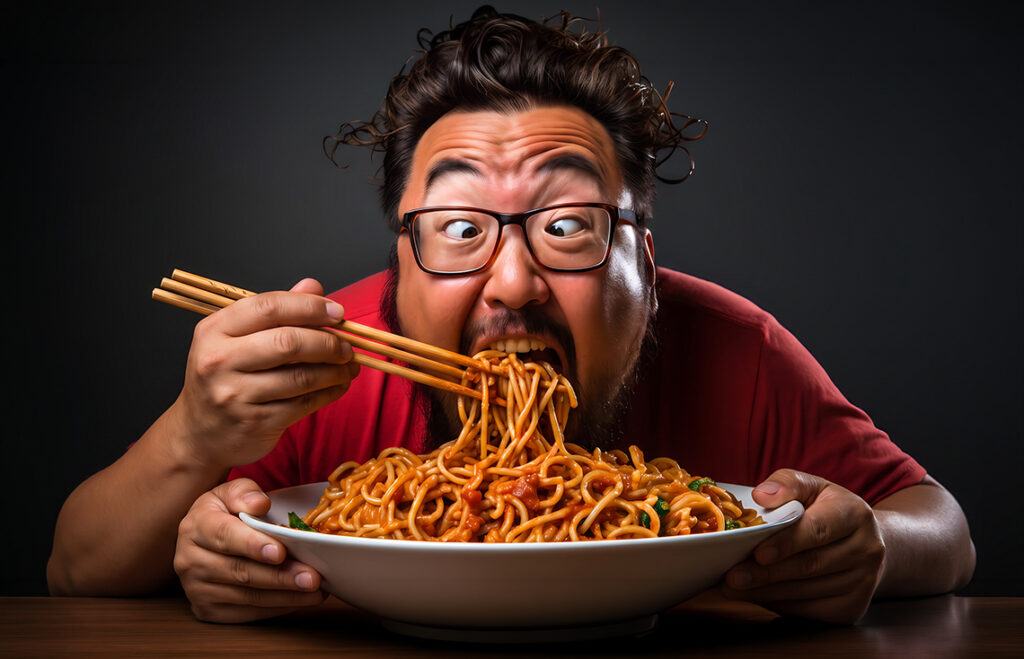
But let’s be honest: working with this new digital colleague means dealing with its bizarre, hilarious quirks. If you have ever asked an AI image generator to create a picture of a person eating noodles, you know exactly what I mean. You get a beautiful, hyper-realistic image, except the person has three hands and is somehow juggling the noodles with three chopsticks.
AI does not actually know what noodles are, nor does it understand human anatomy. It does not think; it predicts. It just knows which pixels usually go next to each other based on billions of data points. This leads to what the tech industry politely calls “hallucinations.” In layman’s terms, the robot lies to you with absolute, unshakeable confidence.
I once asked a text AI to find a specific historical quote for the tagline of a commercial I was doing. It gave me a beautiful, poetic quote, attributed perfectly to a famous author. I looked it up. It didn’t exist. The AI had simply fabricated it because it thought it sounded like something a human would say in that context. It was gaslighting me with syntax.
The Crown King of Clichés
This brings me to the core realization of my creative existential crisis: AI has no soul. It can mimic style, but it cannot mimic human experience.
AI creates by looking backward. It analyzes everything humans have already uploaded to the internet, blends it up in a digital blender, and pours out a smooth smoothie of average output. Because it relies on the average of human data, it is the absolute king of clichés. If you ask it to write a romantic scene, it will immediately mention “eyes locking across a crowded room” and “hearts skipping beats.”
The machine cannot draw from the time its heart was actually broken nor it has ever felt the warmth of a grandparent’s hug, or the absurd frustration of stubbing a toe on a coffee table.
True creativity usually lives in the mistakes, the weird detours, and the highly specific human traumas. Art is a bridge between two human minds. When I look at a great design or read a moving sentence, I am connecting with the person who made it. When I look at AI art, I am looking at a mirror of a mirror. It is technically impressive, but it feels hollow. It is the fast food of the mind—cheap, fast, and engineered to taste good, but lacking actual nourishment.
The Sea of Sameness and the Value of Weirdness
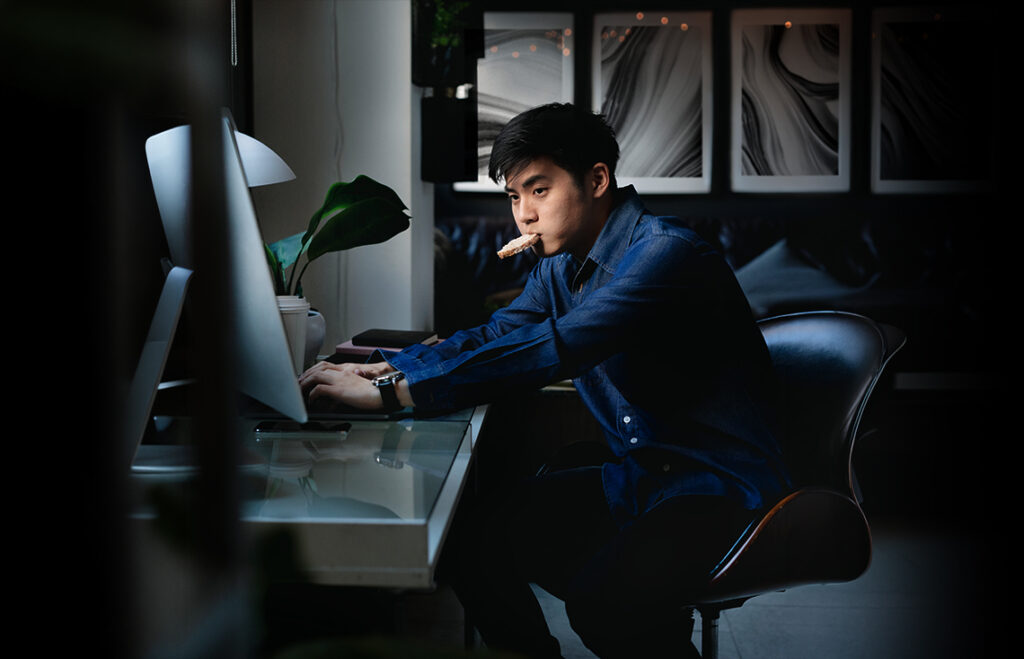
So, where does that leave us, the fleshy, emotional humans? The creative industry is shifting rapidly, and the barrier to entry for production has completely collapsed. Ten years ago, if a small business owner wanted a logo, a promotional video, and a catchy jingle, they had to hire a small army of creatives. Today, they can do it themselves on a Saturday afternoon using automated tools. That is genuinely terrifying for entry-level creatives who used to make a living doing that foundational, entry-level work.
However, this shift is also raising the value of truly exceptional creative thinking. Because anyone can now generate “good enough” content with a simple prompt, the world is being flooded with mediocre, AI-generated noise. Twitter feeds, blogs, and ad spaces are drowning in predictable, machine-written text and glossy, hyper-styled images that all look vaguely identical.
In this sea of sameness, the weird, authentic human voice stands out like a beacon. My job is no longer just about executing the craft. The machine can execute. My job is about taste, intuition, and strategy. It is about looking at the twenty options the robot gave me and saying, “This one works because it subverts expectations in a way a computer would never think to do.”
Putting on the Exoskeleton
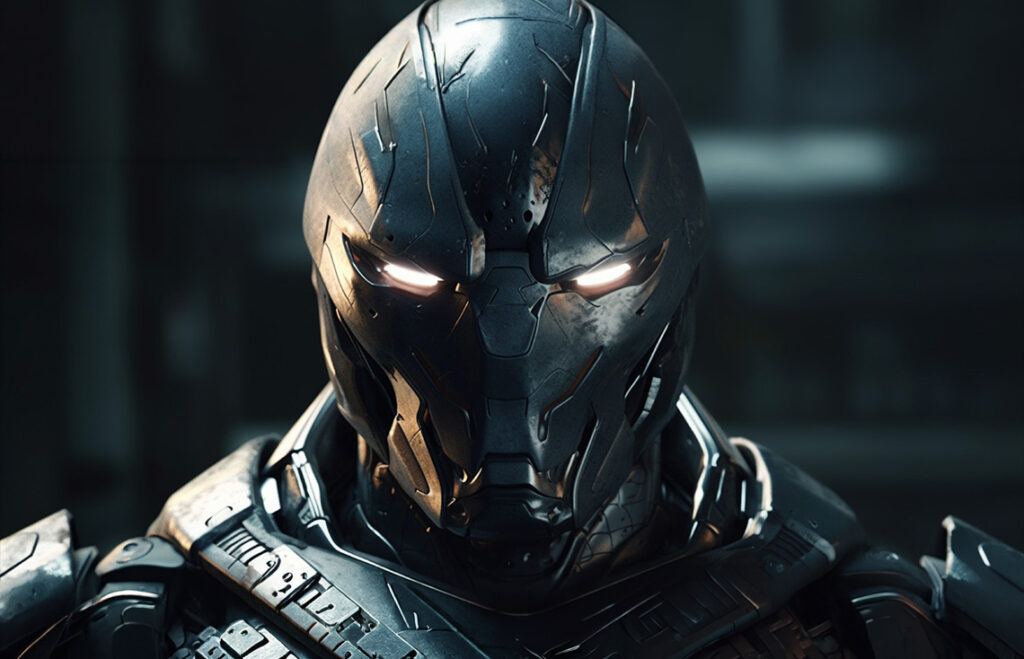
I’ve stopped viewing AI as my replacement and started viewing it as my exoskeleton. It handles the heavy lifting, the formatting, the resizing, and the basic drafting. This frees up my human brain to do the actual high-level dreaming. I can spend more time thinking about the “why” instead of just the “how.”
Ultimately, the creative industry isn’t dying; it is just evolving. We are moving from the era of creation to the era of curation. The creatives who survive won’t be the ones who fight the machines, nor will they be the ones who blindly let the machines do all the work. The survivors will be the ones who learn to steer the machine.
As for me, I am still drinking cold lattes at 2:00 AM. But now, I am using AI to format my scripts and clean up my messy drafts, while I focus on coming up with the next weird, flawed, beautiful human idea. And if the robots ever figure out how to properly mimic my humanity, well, then I might really be in trouble.